
Portions of this blog post were originally published by me on Creative Business League. This was the original Tool Talk – a series on how to save your tools.
Using a household ingredient to clean your files
We have a saying in the jewelry business – you can never have too many tools! OK, so that’s not an official saying, but it should be. When a friend recently gifted me a bunch of their old jewelers’ tools – some of them doubles of tools I already had – I didn’t think twice; of course I could make them work! I also recently found a bunch of stamps and small tools at an antique mall in Paso Robles. I felt like I’d really scored!
Jewelry tools are expensive, highly specialized and become like beloved members of your family, albeit cold, hard, steel members of your family. Here in San Francisco, our cold, damp “Summer” can coat your loved ones in a layer of rust. Such was the case with this group of tools.
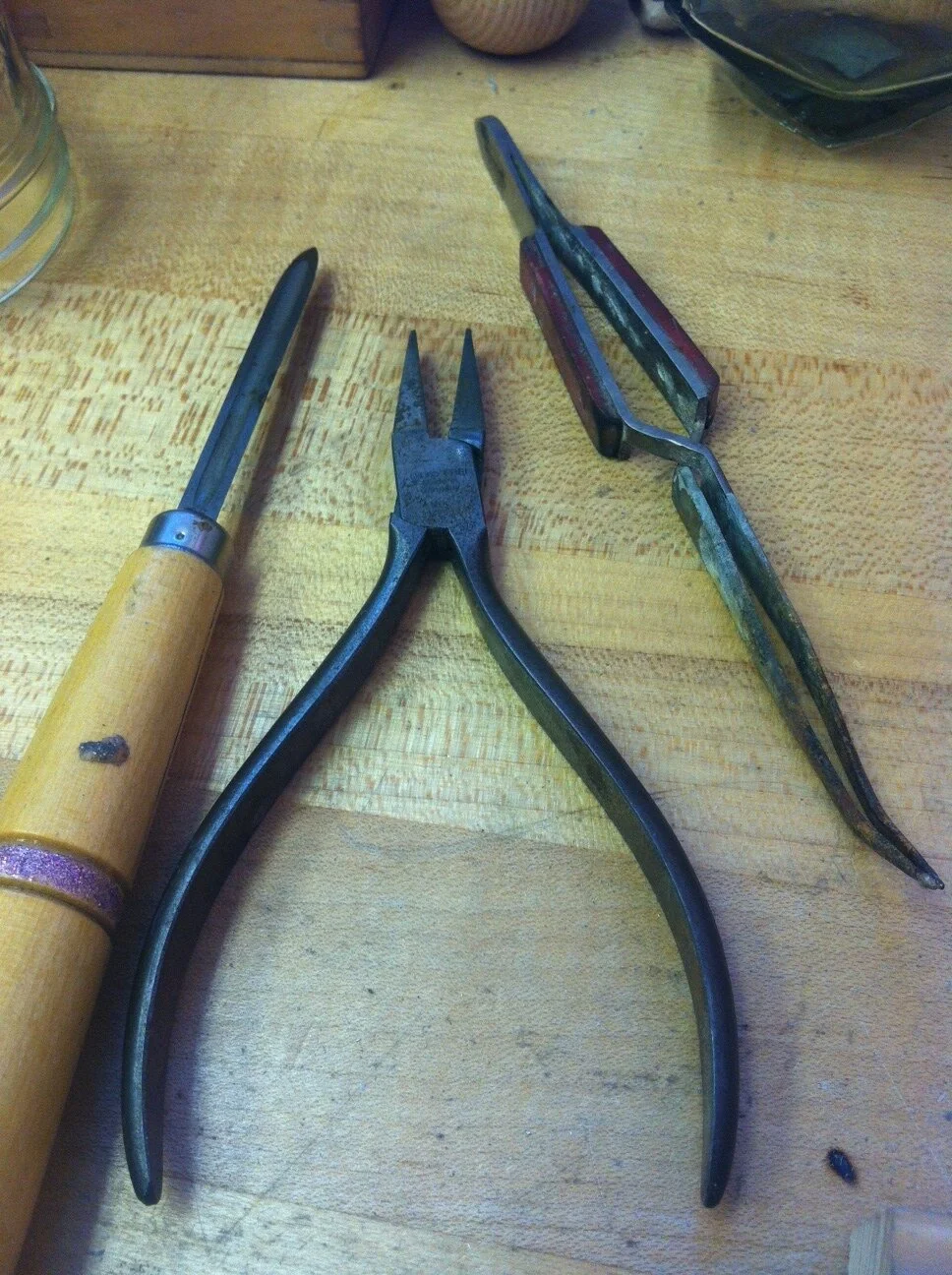
I’ve refinished a number of tools over the years – hammers, pliers, tweezers, flex shafts – these are easy – all flat planes and smooth surfaces, so I can sand & file off any rust or pits in the steel, apply 3-in-1 Oil and Presto! Good as new.
But files are a different story. Some of these new-to-me files had wax and metal filings caught in their teeth (pretty normal by jewelers’ standards), but a few had rust deep in their grooves. This presented a different problem; I couldn’t just sand or file the rust off without damaging the teeth of the files. What was I to do? To the Internets!
According to many internet searches, I would need either phosphoric acid (requiring a trip all the way out to Lowes or Home Depot) or sulfuric acid (corrosive to soft tissue like, um, your skin and corneas, and also historically known as Oil of Vitriol – really rolls off of the tongue, doesn’t it?)
I am not that patient and I really wanted to clean these files soon. So what was the solution? Vinegar. Regular distilled vinegar. Available at the Walgreens right next door to my studio – so convenient! And it helped me to come up with vinegar’s new slogan – Vinegar – What CAN’T It Do?

A lot of what I read said that I should let the tools soak for up to 4 days, but I started to see results after leaving them overnight. I pulled out a few of the less rusty pieces after a day, and left the rest to soak a few days more.

If you decide to try this yourself here are a few Dos and Don’ts:
Do: Remove the wooden handles from your files before soaking. It’s a little extra step, and it avoids moisture being trapped inside of the handle. I was impatient and didn’t do this to all of my files. I should have.
Do: Use a file card before soaking to remove any excess matter and use it again afterwards to clean out any remaining rust from the grooves and teeth of your file. This will help prevent any rust from redeveloping after you soak them in the vinegar.
Do: Oil the hell out of your tools after doing this to protect them. If you live in a damp environment (Seattle, Portland, Hawaii, etc.), its good practice to oil your tools regularly.
Don’t: Do this unless you can be on hand to monitor their progress – i.e. don’t leave these to soak over a long weekend away.

And there you have it. Have you tried this method before? Let me know how it turned out!
This post originally appeared on CreativeBusinessLeague.com
Leave a Reply